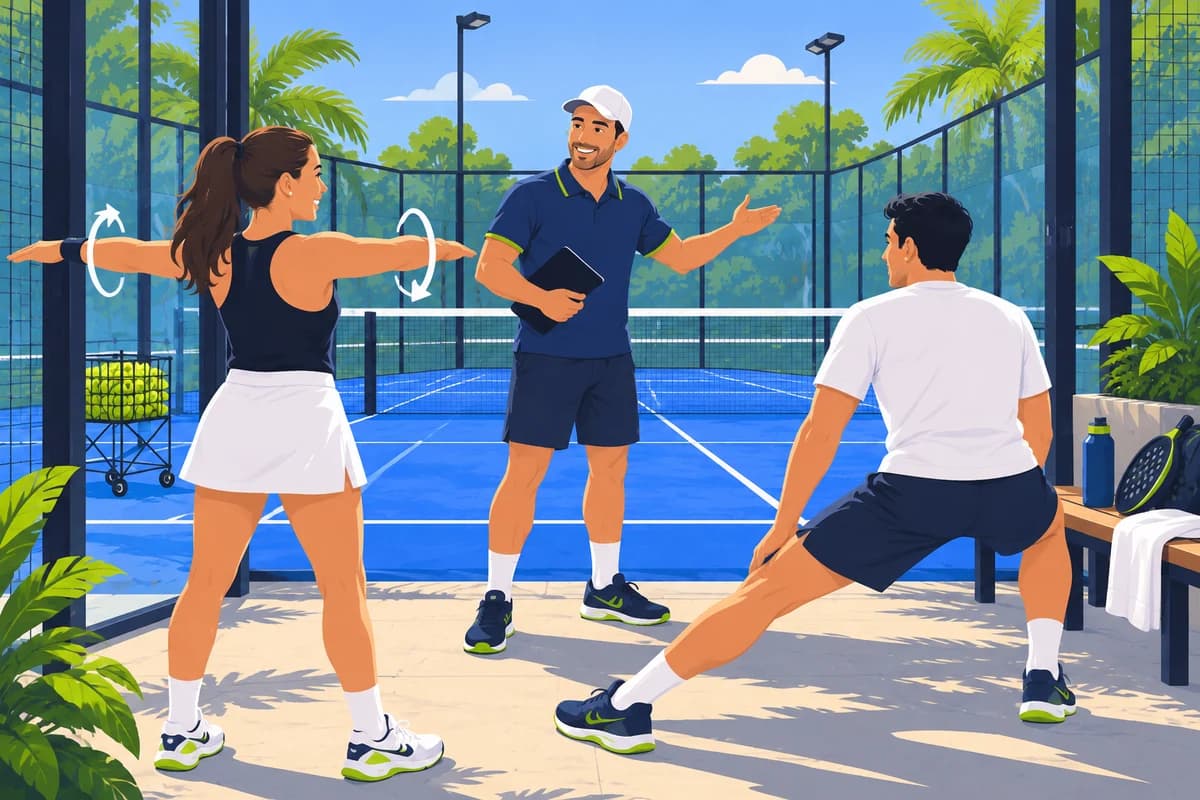
Between work, study and travel, playing more is not always about finding extra time. Sometimes it is about deciding what to do with the time you already have. A padel routine can start with one lesson and one match, adapted to your experience and availability.
Choose a time you can keep
Look for a venue near your usual route. A perfect time slot at a court you struggle to reach rarely lasts. Try a slot you can repeat and allow enough time for the journey.
If you share lessons, first agree on a realistic time with the other players. Then check the coach's options. Coordination becomes a short conversation instead of a long chain of messages.
Give each session a purpose
A lesson can help you work on a specific difficulty; a match lets you recognise when it appears. If you practise returning a ball after it hits the glass, watch for those situations during your next match. You do not need to turn every point into a drill.
- Before the lesson: choose one situation you want to understand.
- Afterwards: note one instruction that helped.
- During the next match: notice when you can use it.
Leave some room in the plan
Confirm the venue and your booking status before leaving. If plans change, follow the coach's cancellation or rescheduling conditions. Leave space between sessions based on how you feel and the guidance you receive; a packed calendar does not guarantee better learning.
A busy week does not erase your progress. Restart with a simple focus instead of trying to catch up on everything at once. Review whether the time, group and frequency still suit you.
Start by finding a coach nearby and choosing a lesson that fits your actual week.